
Ten Steps to Taming Hitting, Pushing, Yelling, and Other Aggressive Behaviors… The Beast Within!
Please note: This is written for parents of children who have made aggression more of a consistent habit, rather than a one-off or situational aggression. As always, consult with a professional before you take a stranger’s advice on the internet.
If you are one of our current Denver play therapy clients, we will give you all of the things mentioned in this blog post! Just ask!
Imagine this… You’re at work, completely overwhelmed with the day’s tasks, busy and right in the middle of taking care of business, and you feel your phone vibrate in your pocket. You quickly glance at the screen, and the name of your child’s school pops up. Your stomach drops. What could be wrong?! Illness, injury, accident (poop or otherwise!). Your heart races.
On the other end of the line, you hear a frustrated teacher telling you that your child has kicked and pushed another child at school… yet again! She tells you that you that you and your child have to do better (or some other pointed language that makes you feel terrible).
A flood of feelings races towards you…
Surprise and Denial (My child is the sweetest! I’m sure that other child deserved it!)
Anger at the System (How dare this teacher?! This school is the worst! I’m sure another child is teaching my child this kind of behavior!)
Anger at Your Child (That little jerk! I’ll yell at him when he gets home! That will teach him!)
Anger at Yourself/Shame (I’m the worst parent in the entire world! I’m worse than a hamster! I have no idea what I’m doing as a parent and everyone can tell.)
Anxiety (What if my child does get kicked out of school?! What am I going to do for child care?! What is going to happen to my child if they don’t get better and this doesn’t change?! Are they going end up in prison?! Note to my fellow anxious parents: there is no preschool to prison pipeline.)
Dread (How am I going to face their teacher the next day?!)
Apathy/Freeze/Nervous System Collapse (I’m so overwhelmed; let’s just pretend this isn’t happening?!; I need ten naps first; they’re just a bad apple; they take after their other parent who has a temper; there’s no hope, etc. For the record, that’s a totally valid response, but it’s simply not accurate.)
Once the initial flood of feelings has passed and you have taken your ten naps, you’re as ready as you’ll ever be to tackle this ten-step plan.
Remember this: Because of the beauty of neuroplasticity, every person can change. Neuroplasticity is the brain’s lifelong ability to adapt, grow, and reorganize its structure and neural connections in response to new experiences, learning, and environmental changes. Neuroplasticity is at its absolute peak throughout early childhood, which is why now is the perfect time to help your child tame aggression.
By now, your child has had a few experiences where aggression has gotten them what they wanted. Aggression is simply a habit at this age, not a moral failing. There are many evolutionary and developmentally-appropriate reasons why children often turn to aggression as a tool.
However, as we all can recognize, in the long-term, aggressive behavior damages a children’s sense of self-competence and self-empowerment (i.e., feeling like they can control their behavior and the direction of their lives). Children who often use aggressive behaviors to get what they want end up getting rejected by their peers more often, which damages their relational self-confidence and self-esteem. Lastly, of course, aggression really stresses out the caregivers in your child’s life: you, your child’s teachers, etc.
You deserve to maintain a peaceful home. Your child’s teacher deserves to maintain a peaceful classroom. Your child deserves to learn other, far more effective ways of communicating and coping, beyond aggression.
Learning more effective tools will set your child up to be a successful adolescent and adult!
The good news is that taming aggression can happen surprisingly quickly with enough consistency. In any case, try not to think of how long it will take for your child to change, but do try to think about the long-term benefits of teaching your child the empathic boundaries outlined in the following plan.
If you are partnered or co-parenting, it is really helpful if you both work on implementing this plan together. Children can be surprisingly resilient even with different rules in different homes, but it is easier for everyone if all caregivers are on the same page.
Start here.
I always recommend starting by watching this wonderful Garry Landreth talk called, “Cookies, Choices, and Kids”: https://www.youtube.com/watch?v=sq7nauUPqts
I know we all have dwindling attention spans (Personally, I blame mine on my children, hah!), but his message is so important and motivating. Slow down, pop some popcorn, and make it a movie night. Watch this 35-minute video through to the end.Write down your family’s rules.
On a calm evening, get your family all together in your living room and say that there are going to be two rules in our home from now on. Write these rules down and hang them on your fridge. If your child can’t read, try to draw a picture of the two rules in addition to writing the words.
First rule - No screaming at anyone.
Second rule - No hurting anyone (this means no kicking, hitting, pushing, spitting at, or biting).Time-in consequence.
Decades of research have concluded that spanking is ineffective at teaching long-term compliance and is consistently linked to detrimental outcomes, including higher rates of child aggression, mental health problems, and altered brain development. Consequently, major health organizations recommend non-physical discipline alternatives.
So what else can you do?
Implement this small consequence whenever your child breaks one of your family’s two rules.
This also means that you (the adult) will have to do a time-in if you break either of your family’s two rules. It’s actually good to model taking deep breaths and calming yourself during this time!
Use “the language of choice” to help your child understand that their choices have consequences. “If you choose to hit your sister, you choose to spend three minutes in the time-in corner.”
It is extremely important to say these words in a calm, neutral tone of voice. It is also most likely the best plan to not pay attention to your child while they are in the time-in corner. Try to make the experience as neutral as possible.
If you’re out of the house, you can designate any old space to be the “traveling time-in corner” (or tree or bench).
In general, I recommend creating a time-in corner in your home vs. a time-out chair, mostly because I really like these posters, and you can hang them up in the corner and talk about them with your child before you start implementing this plan. These posters teach excellent self-regulation skills that are helpful for the whole family: https://amzn.to/4fjjPya
Again, the goal is not to shame your child, but simply to break the habit of aggression.
Hang up your posters in a place where everyone can see them (e.g., the corner of your living room) and gather up a few cozy pillows. Put in some sensory squish toys they can squeeze their anger into. The corner should stay consistent and not change or move until your children are older and aggression is a thing of the past! That day will come!
For time-ins, I recommend one minute for every year of your child’s age. I recommend using this visual timer and putting it in a place that your child can see it: https://amzn.to/44pfWCI
Then, just repeat, repeat, repeat. It’s boring. It’s tedious. It seems so simple, but it’s really life-changing for your child and for your family.
Try not to get frustrated with your child no matter how many time-ins they need or no matter how many months it takes. Slow and steady wins the race. Your child’s behavior will change because of the beauty of neuroplasticity. Remember, "most children prone to aggression will eventually respond, “and even welcome the adult taking charge because it reduces their anxiety” (Crenshaw and Swan in the book Supervision Can Be Playful 2nd ed. on page 250).
If you want to process through or talk about anything that happened when your child was aggressive, wait until they are entirely calm again, which may not be until the end of the day. Wait until you are in a quiet room alone. Use a calm and soft tone of voice. Give a big hug afterwards. Children just can’t really take in any new learning when they are feeling upset or too ashamed.
While you are implementing this plan, you also need to be really intentional about being extremely nurturing throughout the day otherwise your child may feel like the only time they get your undivided attention is when you are disciplining them for their behavior. There are more tips about how to do that below.
If you want more guidance, read the book 1-2-3 Magic by Dr. Thomas Phelan or watch this interview with Dr. Phelan: https://www.youtube.com/watch?v=VP5lDao4M-Q&t=41s
If your child has a sibling and they tend to fight physically and/or scream at each other, then the consequence should likely involve both children having a time-in if you see them fighting together. If one child is clearly being passive while the other is being aggressive, then you can just use a consequence for that one aggressive child in that moment. This can get really complicated, and it’s best to talk to a professional about the details of particular situations. The devil is often in the details! I would try to separate siblings during their time-ins so that they can’t see each other during this time at all. You’ll have to likely set up two separate time-in corners though. It will be worth it though in the long-run.Increase your distress tolerance as a parent.
Implementing this consistent consequence will require you to increase your distress tolerance for your child’s difficult feelings. It’s okay for them to feel mad at you about the time-ins. It’s okay for them to feel sad and cry. You can allow their feelings to come and go like clouds in the sky. The long-term goal of taming aggression is more important than stopping their tears in this moment. You don’t have to be mean in any way. You can be extremely gentle and extremely empathic and still hold boundaries. You are simply modeling extremely effective interpersonal skills. Way to go! If you cave, they are learning that aggression ultimately gets them great results, especially when paired with sadness.
The reality is that children NEED these kind of consistent rules. They actually crave this structure deep down. Too much permissiveness from parents is completely overwhelming to children. When children understand that there are clear rules for their behavior, they actually feel safer and calmer. They are looking to you to give them structure, no matter how much they protest. For more guidance, read the section on “Structure” in the book Parenting with Theraplay®: Understanding Attachment and How to Nurture a Closer Relationship with Your Child by Norris and Rodwell.Stay in the present moment.
I recommend leaving school concerns at school during this time, although that may seem counter-intuitive. Don’t lecture your child for past behavior at school because it is simply not effective. Time works differently for children, and any incident that happened school was a long time ago. When you go to pick up your child at school, no matter what has happened, say, "I’m so glad to see you. I missed you.” If your teacher wants to talk to you about your child, just listen neutrally and say, “Thank you for telling me.” Then, I would probably wait until bedtime when everyone is calmer to talk through what happened. Ideally, try not to talk about your child in front of your child. This is not shirking responsibility, but rather focusing on what you can control, which is their behavior at home. Their behavior at school will naturally change as a result of changing their behavior at home.Nurture secure attachment.
The goal is to maintain a securely attached relationship while your child is going through this really stressful developmental period. At bedtime, do a ritual that Dr. Becky recommends by saying to your child every night right before they fall asleep, “There is nothing you could ever do that would ever make me love you less.” When you are trying to change behavior, your child needs a ton of reassurance and nurturing, which may seem counter-intuitive. Safe relationships facilitate neuroplasticity. That is why we tell children rules and consequences very calmly and try to limit shame, because shame is extremely dysregulating for children and causes some children act out even more.
Sometimes children are being more aggressive because it is the only time they are getting anyone’s full attention focused on them. An aggressive child often feels unimportant deep down. Our phones are constantly competing for our attention as parents, so make a point of putting your phone away. Make sure you have a daily ritual where you are focused entirely on your child and only them. Even five consistent minutes a day entirely focused on them can help to facilitate secure attachment and reduce aggression. Call it your “special check-in time.” Have a special handshake and hug. Whatever feels connecting!
This book describes super helpful ways to increase connection and secure attachment through play: The Way of Play: Using Little Moments of Big Connection to Raise Calm and Confident Kids by Bryson and Wisen-Vincent.
Never withhold this time from them, no matter how “bad” their behavior. Likely they are really hurting that day and need your love and care even more. Get good at repairing and reconnecting with your child, as Dr. Becky reminds us in her moving talk: https://www.ted.com/talks/becky_kennedy_the_single_most_important_parenting_strategy
If you are a single parent or have multiple children, making this time is extremely difficult! By any means necessary, try to find a few minutes alone for each child, every day. If you can have a little “date” with your child alone every week (e.g., going to the park, going to get ice cream, playing one-on-one), that is even better, but even a little bit of individual attention every day makes a difference.Increase your child’s emotional vocabulary.
Name it to tame it! Use feeling words in your home as often as you can. Look to the feelings chart included in your time-in posters for ideas. Talk about your own feelings often. Label “frustration” in yourself or your child before it turns into aggressive anger. Catch your child in the “yellow” before they are in the “red” and take a little walk around the hallway or backyard before coming back inside. Get creative!
Name their triggers and try to set them up for success. For example, if you are going to a loud, crowded birthday party, tell your child that it might make them feel overwhelmed and sometimes they hit people when they get overwhelmed. Make a plan to take a one deep lion breath every 20 minutes and then set your alarm.
Similarly, I recommend getting some toys that facilitate a healthy release of aggression. I’ll write more about why it helps someday, but basically, if you never allow any aggressive play in your home, children tend to suppress it and it bubbles up in more impulsive ways. Safe rough housing is healthy because it allows children to experience aggression in a controlled way and then to experience more mastery over aggression. Making aggression more playful can release some of its tension.
Here are a few items that children are really drawn to:
Dinosaur Bop Bag: https://amzn.to/4pmlZle
Foam swords and shields: https://amzn.to/44qj8xP
Dinosaur hand puppets: https://amzn.to/3SQrNqELimit your child’s screen time until aggression decreases.
Researchers have identified that spending too much time on screens may cause emotional and behavioral problems in children, and those problems can lead to even more screen use (likely because children and their parents are trying to co-regulate and self-soothe with technology). Conducted by an international team of researchers, this study systematically reviewed and meta-analyzed 117 studies, encompassing data from over 292,000 children worldwide (https://www.apa.org/pubs/journals/releases/bul-bul0000468.pdf)
I truly am the last person to screen-shame another parent. My children have at least an hour of screen time in our home a day and that works for them and for our family. There’s all sorts of screen time, and it usually just gets lumped into one category, which is inaccurate and unfair. However, I just want to encourage you to conduct a little experiment and see what happens to your child’s aggressive behavior when you reduce screen time. Every child is different, so I just encourage at least a trial period.
This post on Reddit about a mom wanting to detox her children from Roblox was really compelling, especially the comments from other parents: https://www.reddit.com/r/Mommit/comments/1ulac1x/never_let_your_kids_on_roblox/
Of course, PBS shows like Daniel Tiger and Bluey teach really great social-emotional skills, so those are always allowed in my opinion : )Enroll your child in weekly play therapy if possible.
If you are able to, seek out weekly play therapy for at least 25-35 sessions if at all possible (as recommended in evidence on outcomes of child-centered play therapy), so that your child can also have a place to express their intense aggressive feelings within a safe relationship. Over time, when children are able to express their anger in a safe way through play, its intensity decreases. It is also possible that there may be an underlying issue contributing to your child’s aggression, such as anxiety or ADHD. Especially if your child is diagnosed with ADHD, remaining consistent and providing more structure as a parent is critical.A play therapist would be able to help you understand your child’s unique type of aggression more.
As Jerome Kagan emphasized (1998 lecture; cited in the book Supervision Can Be Playful 2nd. edition, edited by Drewes and Mullen on page 248): “Even the most aggressive children are not aggressive all the time. We can’t really talk about aggressive behavior in children without the context and teh specifiers. Some children are aggressive at school but not at home and vice versa. Some children attack their siblings but no other children. The context is very important and needs to be spelled out.”
If your child is only having aggression at school and never at home, a play therapist may be able to observe your child at school and determine what additional factors may be contributing to their behavior (e.g., sensory overwhelm, rejection sensitivity, revenge directed at other children, etc.).
Remember too, as Crenshaw and Swan (cited above) remind us, that “not all behavior has an aggressive intent…Once a child is labeled as ‘aggressive,’ sometimes it is difficult for even the most well-intentioned adults to view behaviors of that child as neutral even when some behaviors are not coupled with intent or feelings on the part of the child.”
Questions that can help you to better understand your unique child’s aggression include:
How does aggressive behavior both help and hinder my child?
How does my child feel before, during and after being aggressive?
When and why has my child needed this aggressive behavior?
Are there places or relationships in which my child may perceive that they still need their aggression to remain emotionally or physically safe?
In what spaces does my child no longer need their aggression?Consult a child psychiatrist if recommended.
If you are being consistent at home and aggression is still occurring frequently, or you are still getting calls from school, don’t be afraid to see what a child psychiatrist might recommend in terms of medication. Children sometimes need a little more neural support to facilitate their brain’s neuroplasticity. Each child’s brain is unique. There’s so much about the brain we don’t know. Many, many complex factors influence childhood behavioral health. It’s okay for your child to need more support. We used to live mostly outdoors. Everything has changed, and our brains haven’t had time to evolve!
You are a highly capable parent! Your child is highly capable of changing their behavior! Aggression is a habit that can change just like any other habit with enough consistency.
Warmly,
Dr. Alison
Please note: As an Amazon Associate, I earn from qualifying purchases. However, I only recommend products that I personally use and trust.
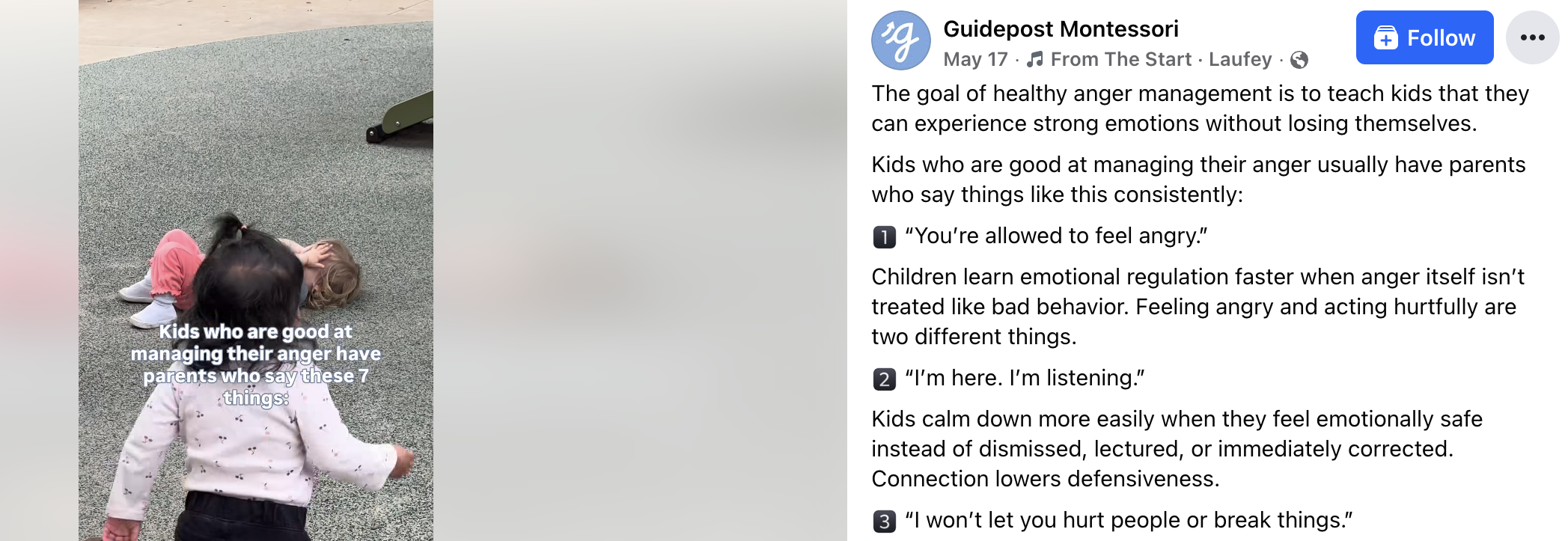
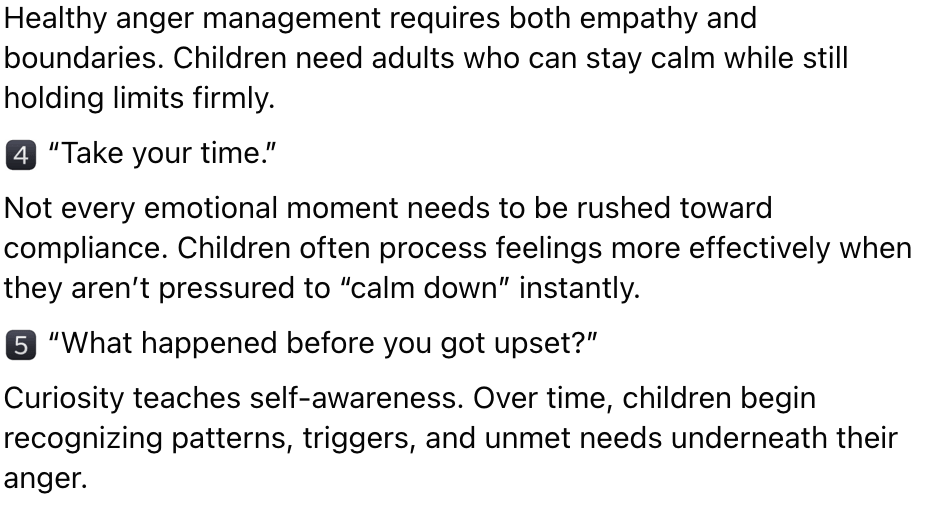
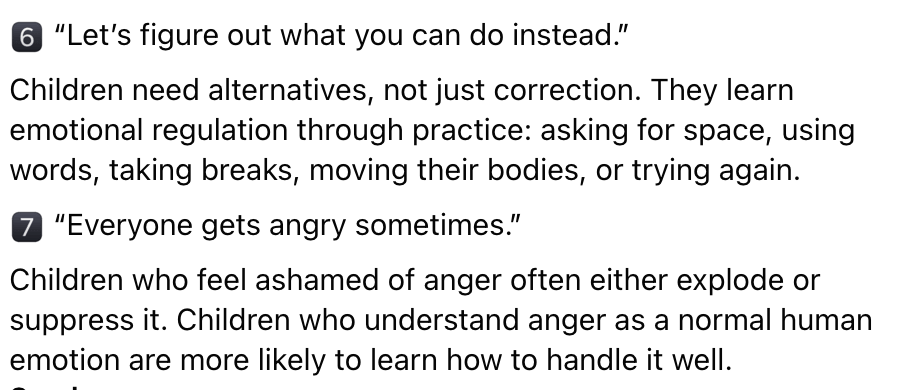
I really appreciated this post from Guidepost Montessori. Example language is super helpful.
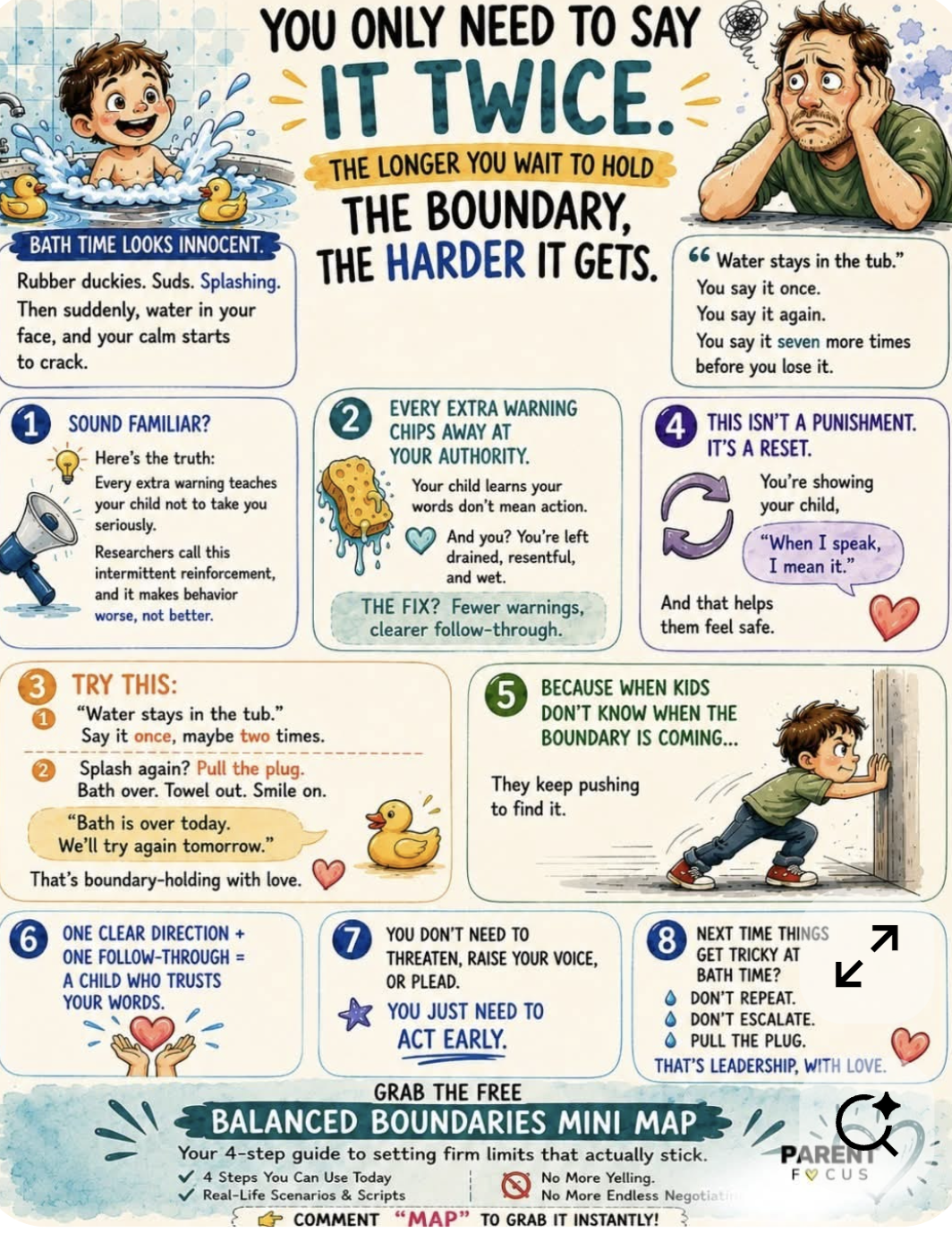
I also found this reminder from Parent Focus really helpful.